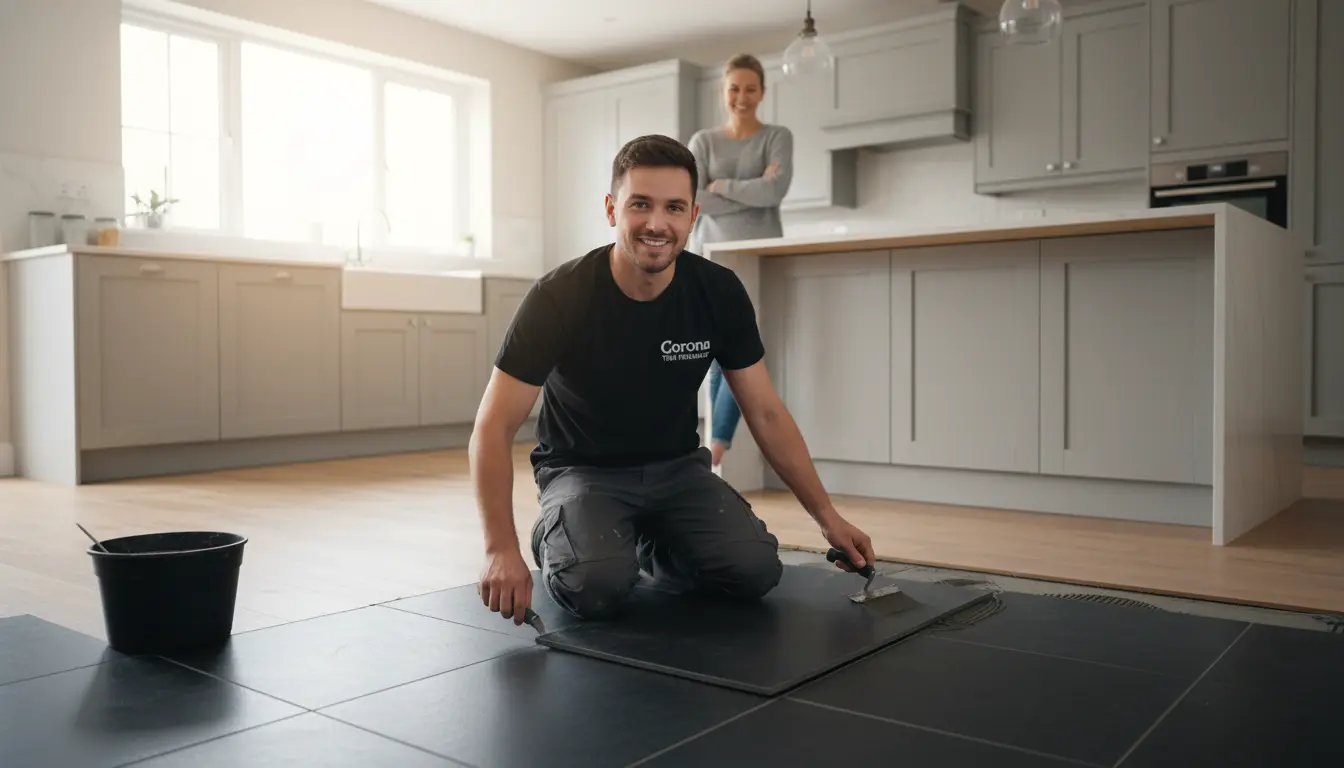
It’s a typical Monday morning in Corona, California, and local tile installer, John, is already facing a challenge. He’s on his way to a job site in the Canyon Crest neighborhood, where he’s scheduled to install new tile flooring in a residential home. However, upon arrival, he discovers that the shipment of tile he was expecting hasn’t arrived due to a material shortage. This means that the job will have to be delayed, and John will have to reschedule with the homeowner. Situations like this are all too common in the tile installation industry, where material shortages can have a significant impact on the timeline and budget of a project.
In Corona, where the hot and dry climate can be challenging for tile installations, it’s crucial to have a reliable supplier and a well-planned schedule. Material shortages can occur due to various reasons, such as high demand, supply chain disruptions, or production issues. As a result, tile installers like John must be prepared to adapt to these situations and find alternative solutions to minimize delays and ensure that the project is completed to the highest standards.
The importance of precision-engineered tile work cannot be overstated, particularly in areas like Corona, where the climate can be harsh on indoor and outdoor tile installations. At Corona Tile Installer, we understand the importance of using high-quality materials and techniques to ensure that our installations are durable, long-lasting, and resistant to the elements. Our team of experienced professionals is dedicated to providing exceptional service and ensuring that every project is completed on time and within budget.
Technical Process
The professional tile installation workflow involves several critical steps, including substrate preparation and leveling, waterproofing/crack isolation, layout engineering, mortar application, and epoxy/cementitious grouting. Each of these steps requires specialized tools and techniques, such as wet saws with diamond blades, notched trowels calibrated for coverage, and laser levels. By understanding the scientific reasoning behind these tools and techniques, tile installers can ensure that their installations are of the highest quality and meet the specific needs of each project.
In Corona, where the high ambient temperatures and aridity can affect the performance of adhesives and grouts, it’s essential to choose the right materials and apply them correctly. For example, using a polymer-modified thinset can provide improved flexibility and durability, while a moisture vapor emission rate test can help to identify potential issues with the substrate. By taking these factors into account, tile installers can ensure that their installations are resistant to the local climate and will withstand the test of time.
For homeowners in Corona who are considering a DIY tile installation project, it’s essential to understand the risks and challenges involved. As we discuss in our article on DIY vs Pro Tile Installation Pros and Cons for Corona Homes, attempting to install tile without the necessary experience and expertise can lead to costly mistakes and a poor-quality finish. Instead, it’s recommended to hire a professional tile installer who has the knowledge and skills to ensure that the job is done correctly.
Comparison of Tile Materials
When it comes to choosing the right tile material for a project, there are several factors to consider, including durability, maintenance, and aesthetics. In our article on The Ultimate Guide to Choosing Durable Tiles for Riverside Kitchens, we discuss the importance of selecting tiles that are resistant to scratches, cracks, and fading. By understanding the different types of tile materials available, including ceramic, porcelain, and natural stone, homeowners can make an informed decision and choose the best option for their needs.
One of the key considerations when choosing tile materials is the porosity rating, which refers to the amount of water that the tile can absorb. Tiles with a low porosity rating are more resistant to water damage and staining, making them ideal for areas such as kitchens and bathrooms. In contrast, tiles with a high porosity rating may require more maintenance and sealing to prevent damage.
Data Comparison Table
The following table compares the key features of two popular tile materials, ceramic and porcelain:
| Feature/Metric | Ceramic | Porcelain |
|---|---|---|
| Porosity Rating | 0.5-1.5% | 0.1-0.5% |
| Flexural Strength | 15-25 MPa | 25-35 MPa |
| Maintenance Load | Medium | Low |
Expert Insights
As a professional tile installer, it’s essential to stay up-to-date with the latest trends and techniques in the industry. In our article on Top 10 Tile Trends Boosting Property Value in Corona, CA, we discuss the importance of selecting tiles that are not only aesthetically pleasing but also durable and low-maintenance. By understanding the latest trends and technologies, tile installers can provide their clients with the best possible solutions for their tile installation projects.
One of the common mistakes that homeowners make when it comes to tile installation is using the wrong type of adhesive or grout. As we discuss in our article on How to Avoid Costly Tile Mistakes: Expert Advice for Locals, using the wrong adhesive or grout can lead to a range of problems, including uneven tiles, cracks, and water damage. By selecting the right materials and following the manufacturer’s instructions, homeowners can ensure that their tile installation project is successful and long-lasting.
Pricing
The cost of a tile installation project can vary widely, depending on the type of tile, the size of the area, and the complexity of the installation. In general, the cost of tile installation can range from $3 to $15 per square foot, depending on the materials and techniques used. For example, a simple ceramic tile installation may cost around $3 to $5 per square foot, while a more complex porcelain or natural stone installation may cost $10 to $15 per square foot.
In addition to the cost of materials, there are several other factors that can influence the cost of a tile installation project, including:
- Subfloor remediation: This can add $1 to $3 per square foot to the overall cost, depending on the extent of the work required.
- Tile material fragility: More fragile tiles may require additional handling and installation techniques, which can increase the cost.
- Complex layout requirements: Intricate patterns or designs can require more time and labor, which can increase the cost.
Safety and Standards
At Corona Tile Installer, we are committed to providing safe and high-quality tile installations that meet the latest industry standards. We are certified by the CTEF (Ceramic Tile Education Foundation) and comply with all relevant safety protocols, including silica dust safety and zero-VOC mortar and grout systems. By choosing a professional tile installer who is committed to safety and quality, homeowners can ensure that their tile installation project is completed to the highest standards and meets all relevant building codes and regulations.
FAQ Section
What is the best type of tile for a kitchen backsplash?
The best type of tile for a kitchen backsplash depends on several factors, including the style and design of the kitchen, the amount of moisture and heat the area will be exposed to, and the desired level of maintenance. In general, ceramic or porcelain tiles are popular choices for kitchen backsplashes due to their durability and ease of maintenance. However, other materials such as glass, stone, or metal can also be used, depending on the desired look and functionality.
How often should I seal my natural stone tiles?
The frequency of sealing natural stone tiles depends on the type of stone, the amount of traffic and use the area receives, and the level of maintenance desired. In general, it’s recommended to seal natural stone tiles every 1 to 3 years, depending on the specific conditions. However, some types of stone, such as marble or limestone, may require more frequent sealing due to their higher porosity and susceptibility to etching.
Can I install tile over existing flooring?
In some cases, it’s possible to install tile over existing flooring, such as vinyl or laminate. However, this depends on the condition and type of the existing flooring, as well as the type of tile being installed. In general, it’s recommended to remove the existing flooring and install a new underlayment to ensure a stable and even surface for the tile. However, in some cases, a tile installation can be done over existing flooring, such as with a decoupling membrane or a self-leveling underlayment.
How long does a tile installation project typically take?
The length of time a tile installation project takes can vary widely, depending on the size and complexity of the project, as well as the number of workers and the amount of time they can devote to the project. In general, a small to medium-sized tile installation project can take anywhere from a few days to a week or more to complete, while larger or more complex projects can take several weeks or even months to complete.
Final Thoughts
In conclusion, material shortages can have a significant impact on the timeline and budget of a tile installation project. By understanding the causes of material shortages and taking steps to mitigate their effects, tile installers can minimize delays and ensure that their projects are completed to the highest standards. At Corona Tile Installer, we are committed to providing high-quality tile installations that meet the latest industry standards and exceed our clients’ expectations. Whether you’re looking for a simple ceramic tile installation or a more complex porcelain or natural stone installation, we have the expertise and experience to get the job done right.